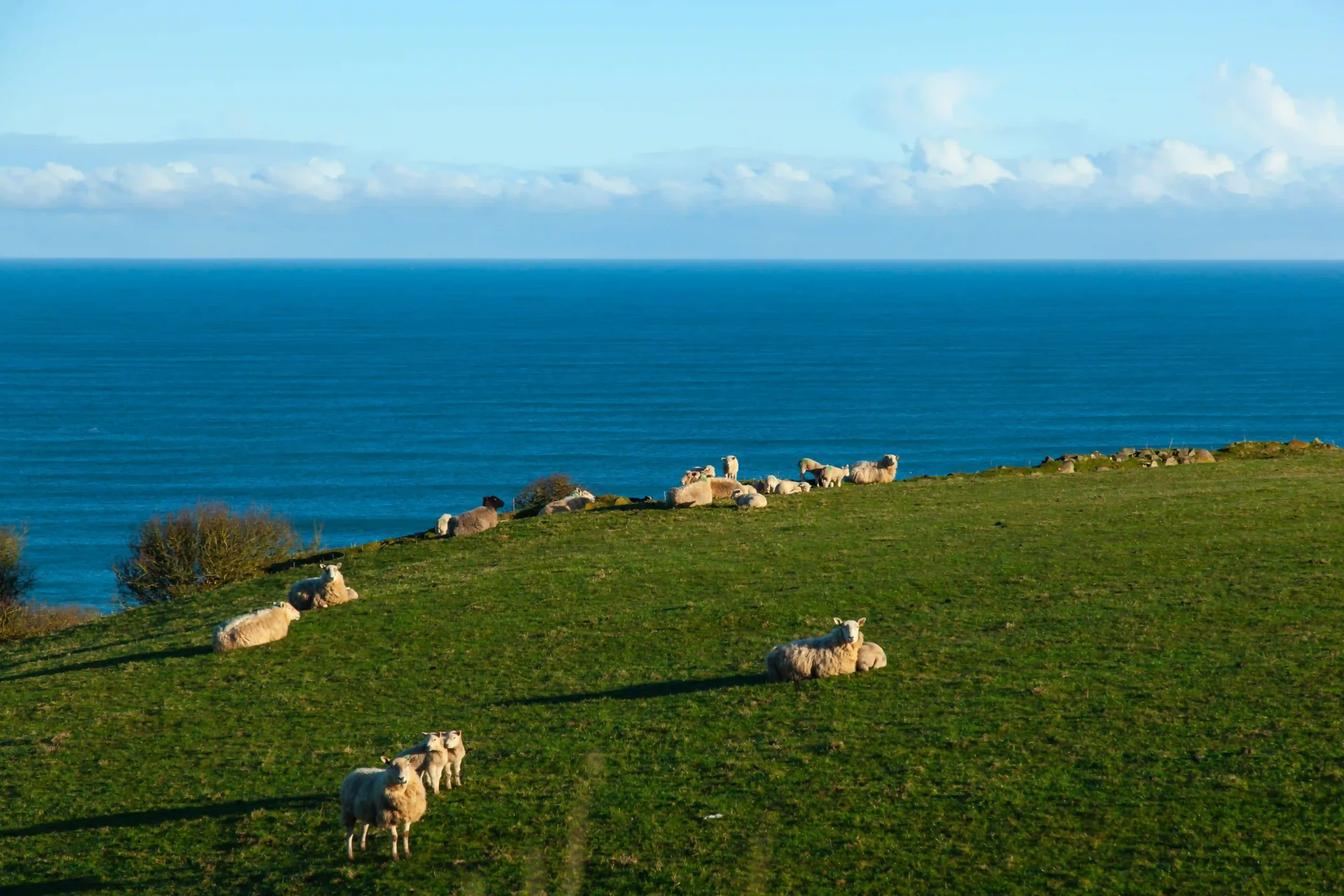
Hire a campervan UK
From Coast to Countryside.
When you think of the United Kingdom (UK), teatime and rainy weather are probably among the first things that come to mind. And yes, the UK does get its fair share of rain, but it’s also part of what gives the country its unique charm. Misty hills, dramatic skies and those sudden showers all add character to the landscape, keeping the countryside beautifully green and giving it a cosy atmosphere.
The UK is split up into four countries: England, the largest and most populated; Scotland to the north; Wales to the west; and Northern Ireland, across the Irish Sea. Each has its own character and traditions, making a decision to hire a campervan UK is a great way to experience a bit of everything.
History is everywhere you look. As you travel around, you’ll come across charming stone villages, ancient castles, ruined abbeys, centuries-old churches and hedgerows that have shaped the countryside for generations. But the UK isn’t stuck in the past. Its traditions and modern culture are very much alive, from rugby and the Highland Games to Formula 1 and the legendary British pub culture.
Why a campervan is your best choice
When you hire a campervan UK, you’re not tied to a fixed schedule. Let the road shape your journey—follow the coastline or drive through green valleys.
With your home always close by, there is no need to rush. You can stay in places that catch your attention, take an unexpected detour, or simply pull over and enjoy the landscape unfolding around you. The journey itself becomes part of the experience, bringing a sense of spontaneity and adventure that is difficult to capture otherwise.
With a motorhome, you can enjoy:
- Freedom & flexibility
- Wake up in nature
- Comfort on long distances
With CU | Camper, you can hire a campervan UK wide from pick-up locations in Chester, London, Preston (England), Edinburgh (Scotland), and Belfast (Northern Ireland). This makes it easy to start your road trip in the part of the UK you’re most interested in exploring.


Our trusted rental partners:


Driving in the UK
- When you hire a campervan UK road rules require driving on the left-hand side of the road.If you’re used to driving on the right-hand side this is probably the main thing to get used to, especially when turning at junctions or entering roundabouts, but it clicks faster than you’d think.
- A standard, valid car driving licence (Category B) is accepted for vehicles up to 7,716 pounds (3,500 kg) if your licence is not in English, carrying an International Driving Permit (IDP) as a legal translation is highly recommended.
- Give way to traffic already on the roundabout, which normally approaches from your right. Choose your lane: s a general rule, use the left lane for exits up to and including 12 o’clock, and the right or inner lane for exits to the right, past 12 o’clock.
- Many UK cities have Low Emission Zones (LEZs), Ultra Low Emission Zones (ULEZs) or Clean Air Zones. Before driving into a city centre, check the local rules and charges for your vehicle.
Avoid driving in central London.
Tip
Discover the United Kingdom by campervan
The UK may look small on the map, but there’s a surprising amount to discover once you hit the road. From England’s rolling countryside and dramatic coastline to Scotland’s rugged Highlands, Wales’s green valleys and Northern Ireland’s wild coastal scenery, each country has its own distinct character.
Campervan hire England
Pickup locations for campervan hire England: Chester, London, Preston
England is home to London, the UK’s capital, as well as many of its famous royal palaces and historic landmarks. But once you leave the city behind, the landscape changes quickly.
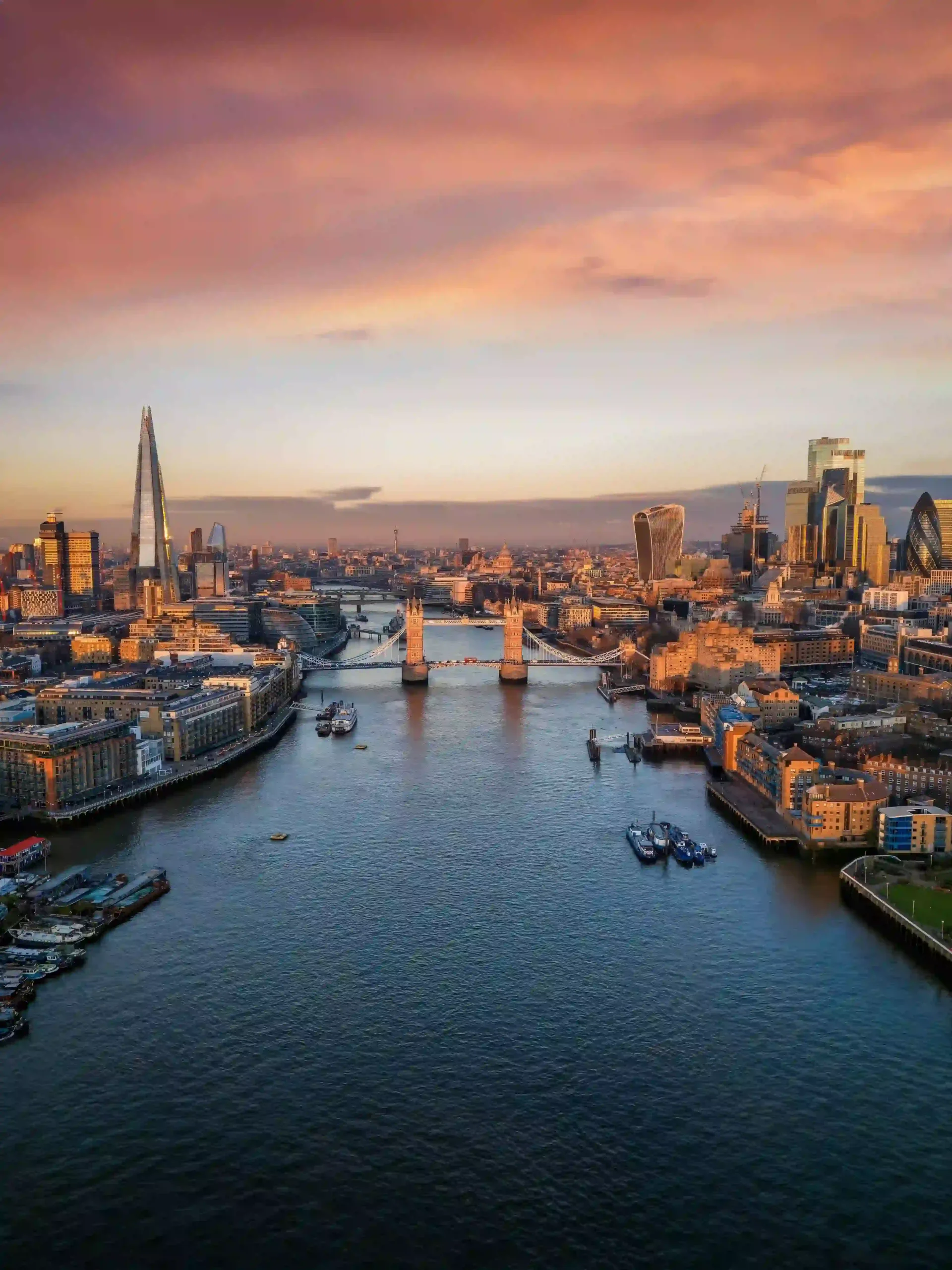
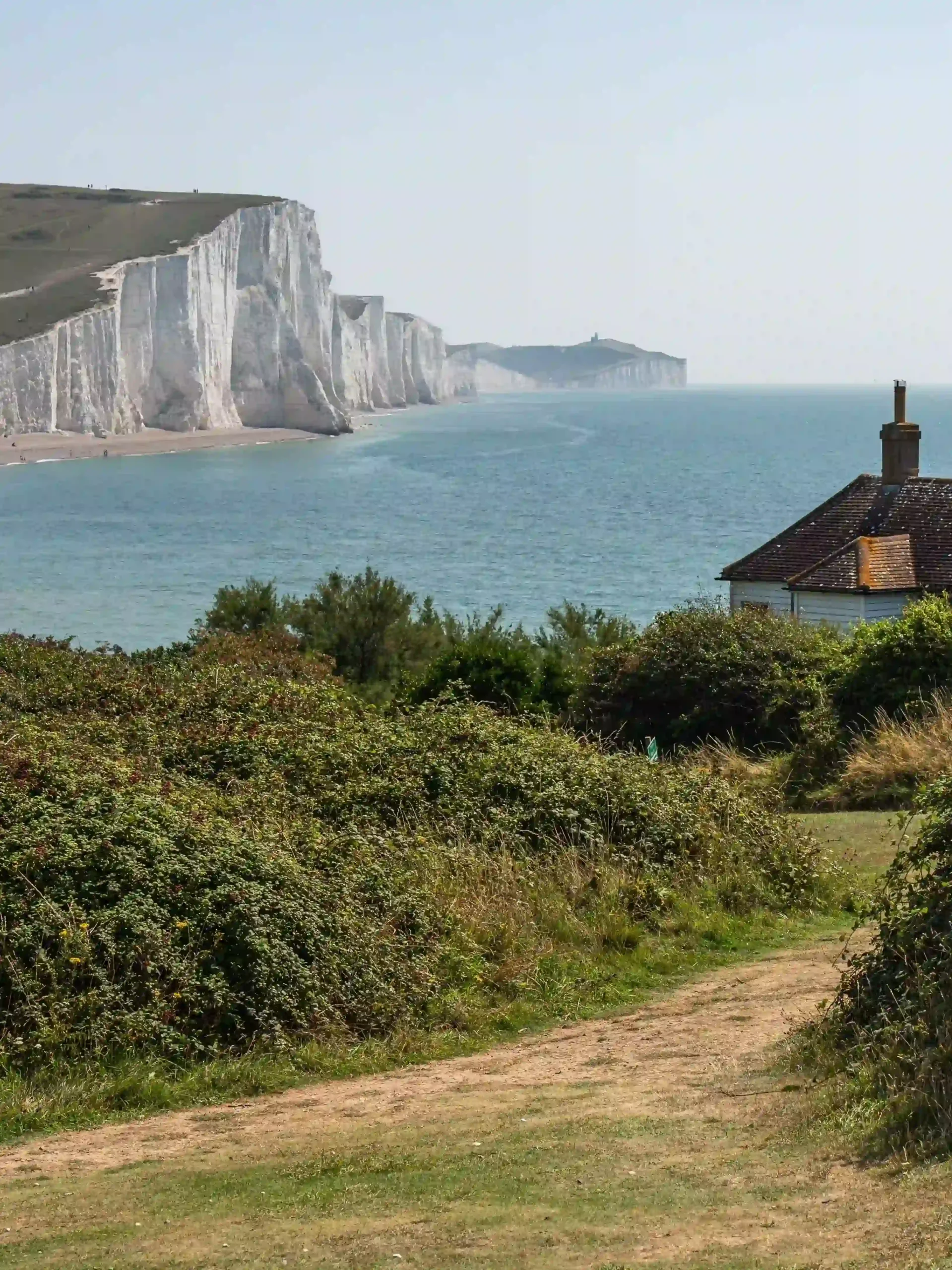
As you travel beyond the busy city, England’s countryside begins to open up. In the south, you’ll find rolling green hills, charming villages, winding country lanes and beautiful stretches of coastline.
Further north, the scenery gradually becomes wilder and more rugged, with open moorland, mountain landscapes and dramatic valleys, particularly around the Lake District near the Scottish border.
If you’re planning campervan hire England, you’ll have plenty of options for combining historic towns, national parks and coastal scenery in a single road trip.
Must-See Parks/Nature:
- Lake District: Features mountains, deep lakes, and forested valleys.
- Peak District: Britain’s first national park, known for its dramatic gritstone edges, underground caves, and rolling green valleys.
- Yorkshire Dales: A beautiful mix of sweeping limestone valleys, waterfalls, open hills and traditional dry-stone walls.
- Northumberland: Celebrated for its wild, remote Cheviot Hills, ancient castles, and exceptional dark skies for stargazing
- Dartmoor: A rugged and atmospheric wilderness of rocky granite tors, open moorland and ancient oak forest.
The Jurassic Coast Drive
Highlight Drive
Campervan hire Scotland
Pickup location for campervan hire Scotland: Edinburgh
As you leave England behind and cross into Scotland, the landscape gradually begins to feel more open and untamed. For a campervan hire Scotland, Edinburgh provides a convenient starting point for exploring both the capital and the spectacular landscapes further north. Roads wind through vast valleys and open moorland, with mountains and lochs appearing around almost every corner. The further north you travel, the more remote it feels. The Scottish Highlands are where this wild character really comes to life.
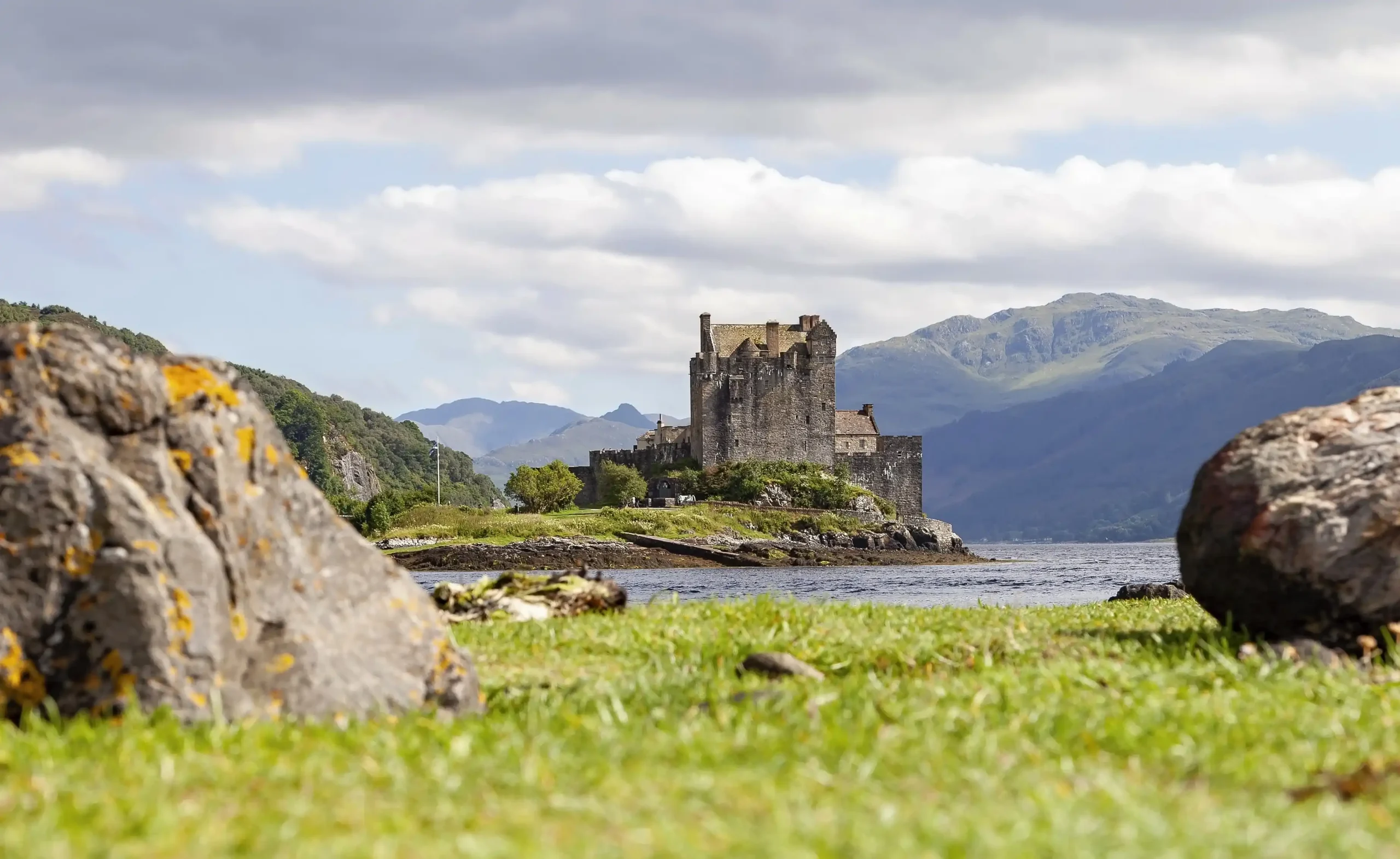
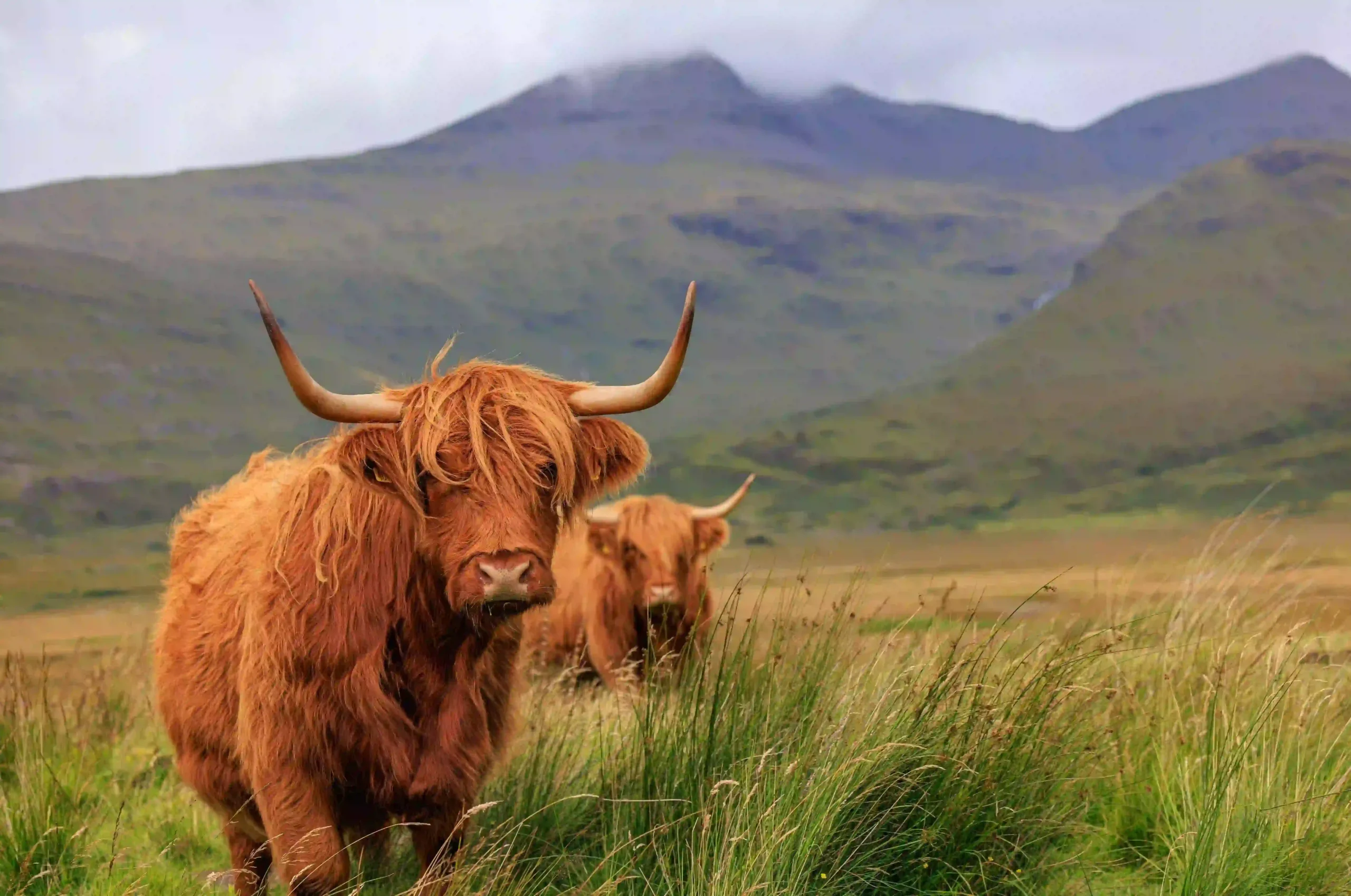
Out to the west, the Hebrides offer some of Scotland’s most remote landscapes, with wild coastlines, turquoise waters and surprisingly beautiful sandy beaches. There’s also a strong sense of Scottish and Celtic heritage as you travel, from bagpipes and traditional kilts to Gaelic signs.
Must-See Parks/Nature:
- Loch Ness: Famous for the Loch Ness Monster.
- The Cairngorms National Park: As the largest national park in the UK, it sits in the heart of the Scottish Highlands.
- Loch Lomond & The Trossachs National Park: A mix of freshwater lochs, forested hills, and rugged peaks.
North Coast 500 (NC500)
Highlight Drive
Campervan hire Wales
Pickup location for campervan hire Wales: Preston (cross the border)
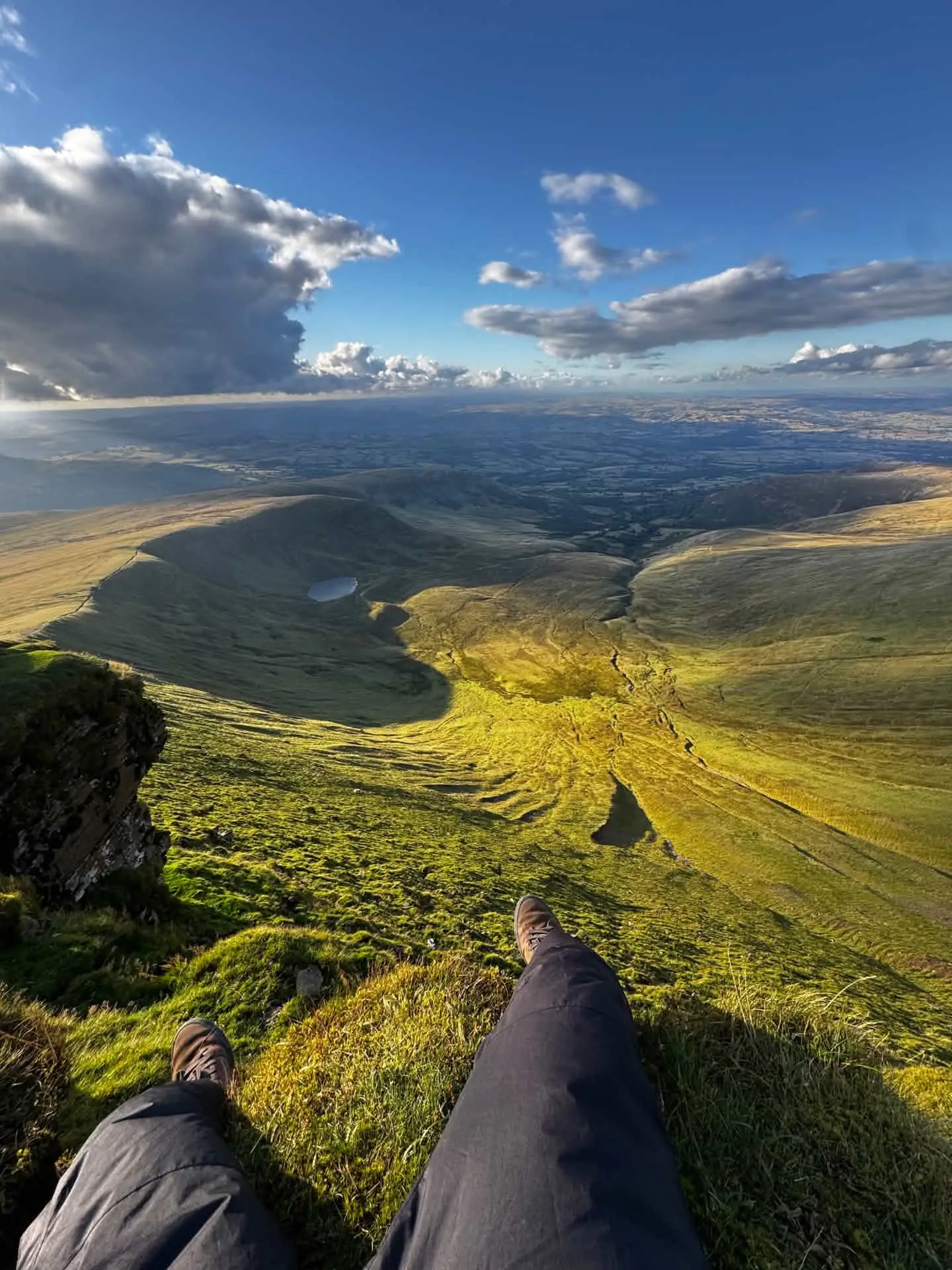
Cross the border into Wales and you’ll soon see why the red dragon is such a fitting symbol for the country. The landscape feels wild and powerful, with rugged mountains rising above green valleys, winding roads disappearing into the hills and a coastline shaped by wind and sea.
Wales also has a strong sense of identity that you’ll notice as you travel. In many rural areas, you may hear Welsh being spoken and see bilingual road signs, adding another layer of character to the journey. In Cardiff, the lively capital, English is widely spoken, but Welsh remains an important part of everyday life and national identity.
And then there are the legends. Wales is a country where history and folklore seem to follow you. Stories of King Arthur, ancient Celtic traditions and mythical creatures are deeply woven into the culture. Even J.R.R. Tolkien found inspiration in the Welsh language when creating some of the languages and names of Middle-earth.
Must-See Parks/Nature:
- Eryri (Snowdonia) National Park: The oldest and largest national park in Wales, home to rugged mountains and Yr Wyddfa (Mount Snowdon), the highest peak in Wales.
- Bannau Brycheiniog (Brecon Beacons) National Park: In southern Wales, this spectacular landscape combines open moorland, red sandstone peaks such as Pen y Fan, limestone caves and hidden waterfalls.
- Pembrokeshire Coast National Park: Follow the rugged coastline past dramatic sea cliffs, golden sandy coves and offshore islands where large colonies of seabirds can be found.
Black Mountain Pass
Highlight Drive
Campervan hire Northern Ireland
Pickup location for campervan hire Northern Ireland: Belfast
Northern Ireland may be compact, but when you hire a campervan UK here, there’s a surprising amount to discover. The landscape changes quickly as you travel, from rolling farmland and misty mountains to rugged coastal scenery.
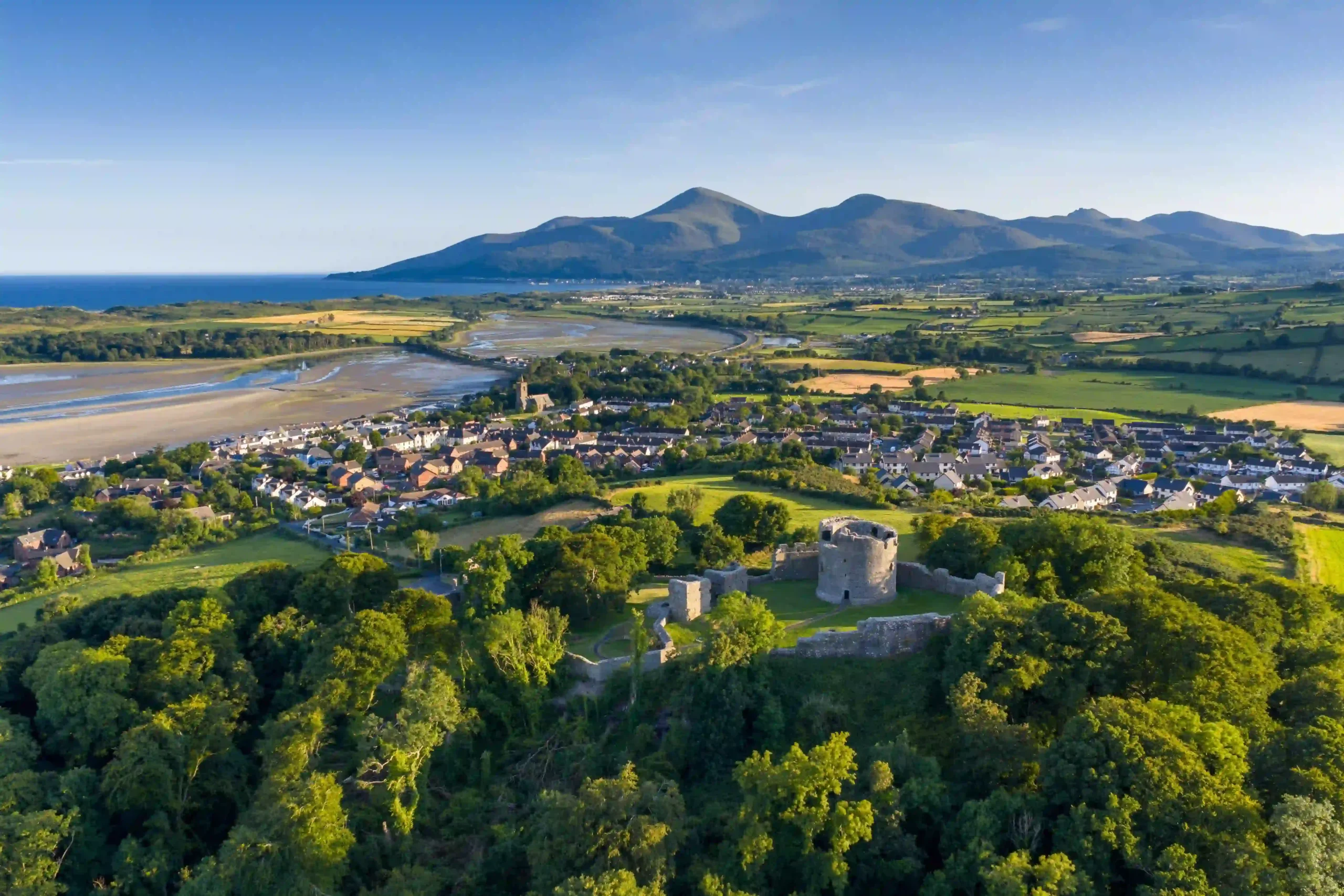
The coast is particularly spectacular, with some of the country’s most famous sights dotted along the Causeway Coast. Inland, the Mourne Mountains provide a completely different atmosphere, with rugged peaks, open slopes and panoramic views across the surrounding countryside.
Must-See Parks/Nature:
- Giant’s Causeway: Here thousands of interlocking basalt columns shaped by ancient volcanic activity stretch along the coast.
- Mourne Mountains: Home to the highest peaks in Northern Ireland, offering beautiful hiking routes.
Causeway Coastal Route
Highlight Drive
Camping in the UK
With a long-established camping culture and thousands of sites across the UK, you can choose between small rural spots near farms and forests, or large holiday parks with all the comforts you could want.
Wild camping & forestry sites
If you’re hoping to get closer to nature, Scotland offers the most freedom for wild camping. Under the Land Reform (Scotland) Act 2003, responsible wild camping is generally allowed on most unenclosed land, as long as you follow the Scottish Outdoor Access Code.
In England, Wales and Northern Ireland, wild camping in a vehicle without the landowner’s permission is generally not permitted.
Private Holiday Parks
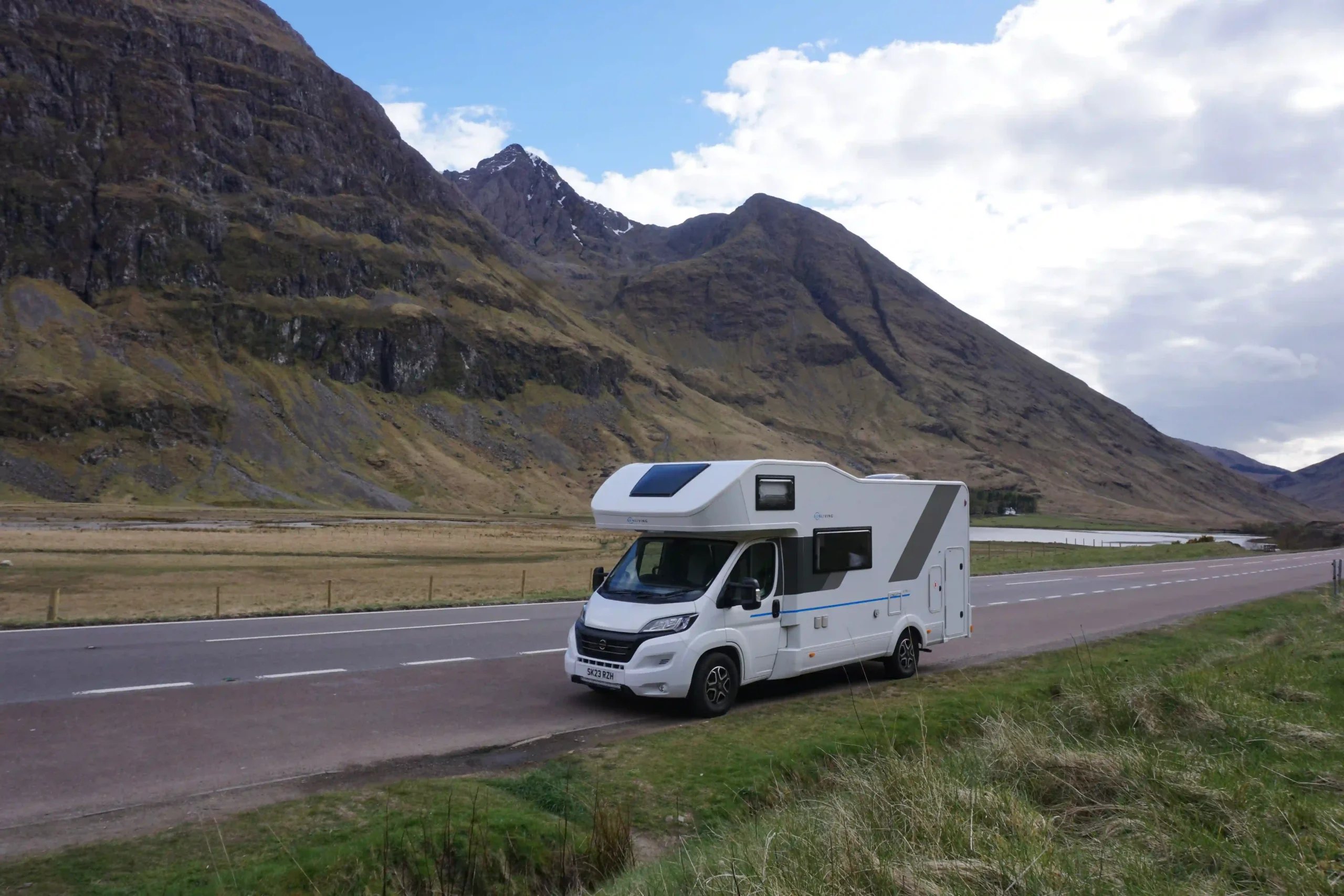
If you prefer a few more comforts, the UK has plenty of private holiday parks. The Camping and Caravanning Club and the Caravan and Motorhome Club both operate extensive networks across the UK. Their memberships last for 12 months rather than being available for individual trips or weekends.
The Camping and Caravanning Club allows non-members to stay at some of its main sites, although a nightly surcharge usually applies. The Caravan and Motorhome Club generally requires full membership to book its club sites.
What to keep in mind
- Pre-booking is essential during summer bank holidays and peak July to August months, particularly along coastal hotspots like Cornwall.
- Use essential apps like SearchForSites, Park4Night, and Brit Stops for staying overnight at rural pubs and farm shops.
- Check before you stay. Rules for overnight parking and camping vary between locations, so always check the latest information before settling down for the night.
When is the best time to travel?
The UK is a year-round destination, but the experience can be very different depending on when you visit.
- Summer (June – August): Summer is the most popular time to hire a campervan UK wide, with longer daylight hours, warmer temperatures and most attractions, campsites and seasonal businesses fully open. The trade-off is that popular areas can get busy, particularly on narrow rural roads and around major attractions. In the Scottish Highlands, midges can also make an appearance during the warmer months, so it’s worth being prepared. Campsites in popular areas should be booked well in advance.
- Shoulder Season (May & September – October): For a road trip, the shoulder season is arguably the sweet spot. You’ll generally find quieter roads, fewer crowds and more availability at campsites, while still having plenty of daylight for exploring.
- Winter (November – March): Temperatures can drop below freezing, and snow and ice can make mountain roads and passes challenging. Many seasonal campsites also close during the winter months, so check opening dates.
May to June
Best time to travel
Most frequently asked questions about Hire a campervan UK
Major pickup hubs are situated near international airports across the country, including London, Edinburgh, and Belfast.
Wild camping in a motorized vehicle is only permitted in Scotland under strict access guidelines. In England, Wales, and Northern Ireland, you must stay at designated campsites or secure explicit permission from the landowner.
While UK motorways are broad and easy to navigate, rural lanes and coastal roads can be very narrow with tight bends and designated passing places choosing a compact or medium-sized campervan makes handling these scenic routes much easier.
Popular apps include SearchForSites, Park4Night, and Brit Stops.